
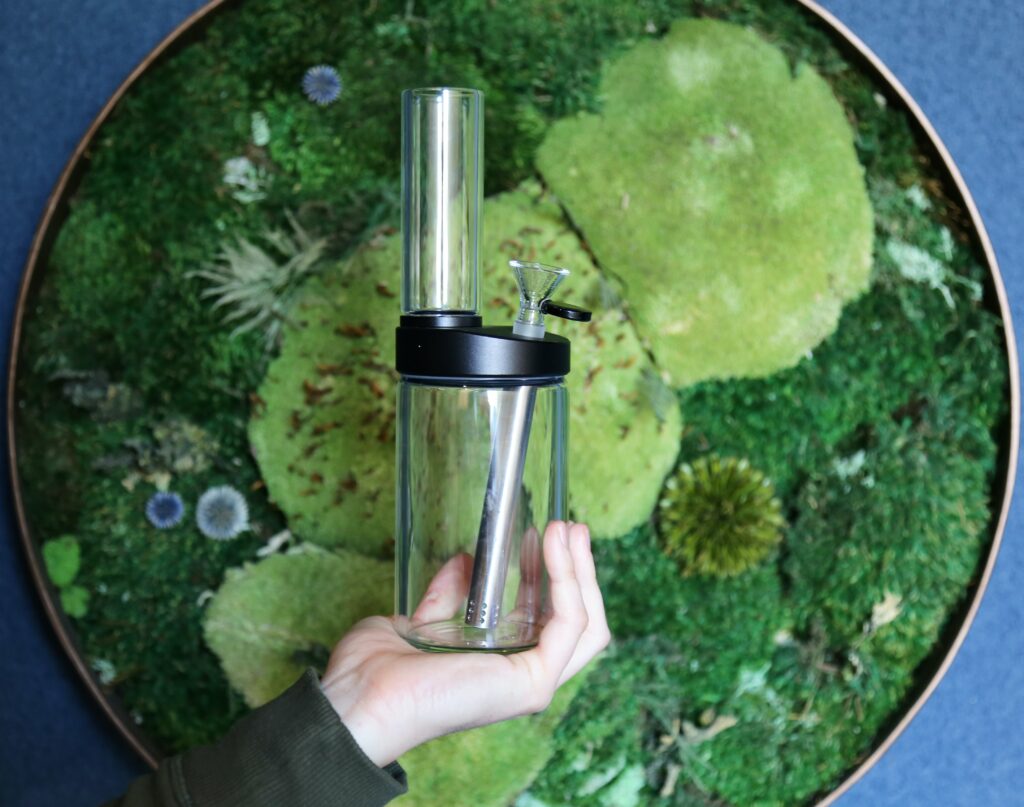
If you’re a fan of smoking cannabis, you’ve probably used a bong at some point. Bongs are popular because they offer a smooth, cool smoke and can be customized in various ways.
But have you ever wondered what exactly goes into making a bong? We’ll break down the anatomy of a bong and give you a better understanding of how these smoking devices work.
Bowl Piece
The bowl piece is where the dried flower is packed after it’s been through a grinder or broken down. Bowls come in a variety of shapes and sizes, much like the bongs themselves, but they’re mostly made from glass or metal with a hole at the bottom.
Some users place a thin-wired metal screen at the base of the bowl piece to avoid having the ash fall through. This helps to maintain the overall cleanliness of the bong longer.
Downstem
A downstem is an essential feature of your apparatus. It links the bowl piece down to the water in the main chamber of the bong, allowing for smoke to pass through. A basic downstem consists of a hollow tube, typically with a set of slits near the bottom, which acts as a percolator to filter the smoke.
There are variations of downstems that further enhance the bubbling and cooling of the smoke, however, whatever the design, it remains a crucial part of the bong.
Base
The base is the foundation of the bong and can take many shapes, depending on style. The most common base shapes are beakers, round bases and straight tubes. These are used to create the water chamber in which the smoke cools as it passes through the water.
Mouthpiece
The final piece of the puzzle is the mouthpiece. Traditional mouthpieces are horizontal and found at the very top of a bong. However, with time, angled mouthpieces are becoming more common, allowing you to take a hit without having to hunch over the bong.
The mouthpiece, of course, is where the magic happens, where the filtered smoke reaches its final destination as you inhale.
The main advantage that draws consumers to using a bong is its ability to cool and filter the smoke through water, offering a smooth draw even when a large amount of smoke is inhaled.
Bongs require less cannabis than a joint, while still maintaining the aroma and flavour profile of the flower.
Through its evolution, bongs today are most commonly hand-blown from glass by artists who blend science and art, creating beautiful and functional masterpieces.